

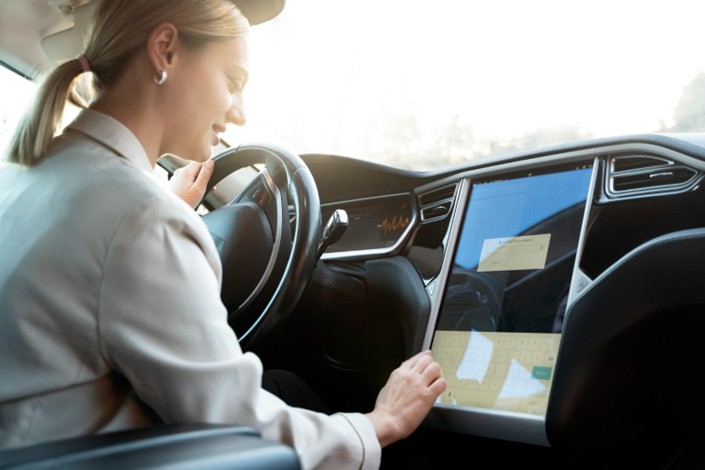
The automotive industry is experiencing its most radical evolution since the assembly line replaced manual manufacturing. For more than a century, the value and capability of a motor vehicle were determined almost exclusively by its mechanical engineering, including the displacement of its engine, the durability of its transmission, and the rigidity of its steel chassis. Today, that paradigm has shifted entirely. Modern vehicles are no longer just mechanical machines with electrical accessories; they have transformed into sophisticated, data-driven computers on wheels.
This digital metamorphosis is completely rewriting the relationship between drivers and their cars. Advanced computational power, high-speed cellular connectivity, artificial intelligence, and revolutionary battery chemistries are converging to create an entirely new driving experience. These technologies are not only making transportation safer and more energy-efficient, but they are also fundamentally redefining the concept of vehicle ownership, autonomy, and daily commuting.
The Rise of Software-Defined Vehicles
The most structural change happening under the hood of modern automobiles is the transition toward software-defined vehicles. Historically, when a consumer purchased a vehicle, its features, horsepower, and capabilities were locked in stone from the day it left the dealership lot. If an electronic component had a software bug or required calibration, the owner had to bring the car into a physical service bay to have a technician manually interface with the computer system.
Software-defined vehicles isolate the vehicle hardware from its operating software through centralized computing architectures. Instead of using dozens of isolated electronic control units scattered throughout the chassis to manage individual components like the windows or the brakes, modern cars utilize high-performance central computers. This shift enables manufacturers to deploy over-the-air updates seamlessly while the vehicle is parked overnight in a residential garage.
This capability changes everything for the consumer. Over-the-air updates allow automakers to fix mechanical defects remotely via code refinements, optimize battery thermal management systems to increase driving range, and deploy entirely new user interfaces or performance packages. Consequently, the traditional depreciation curve of a vehicle is altered because a car can actively become more capable, intelligent, and feature-rich years after its initial purchase.
Cognitive Driver Assistance Systems and Artificial Intelligence
Advanced driver-assistance systems have advanced far beyond primitive warning chimes and basic cruise control. The current generation of mass-market vehicles utilizes sophisticated artificial intelligence models to establish a digital safety net around the driver, working toward a future of zero roadway casualties.
Modern conditional automation systems utilize an array of high-resolution cameras, solid-state laser sensors known as LiDAR, and multi-modal radar units to construct a continuous three-dimensional map of the environment surrounding the vehicle. Artificial intelligence handles this massive stream of data through sensor fusion, which synthesizes different inputs instantly to eliminate blind spots caused by poor weather or dark driving environments.
The true breakthrough in recent vehicle control is the integration of semantic reasoning models. Rather than simply calculating the distance between the bumper and an obstacle, advanced vehicle software can interpret the context of a visual scene. For example, the vehicle can distinguish between a stationary car parked at a curb and a vehicle stopped with its hazard lights flashing near a construction zone. It can recognize a pedestrian stepping off a sidewalk or interpret complex road signs in real time, making split-second decisions to apply automatic emergency braking or execute lane-centering steering adjustments.
Furthermore, these systems look inward as well as outward. In-cabin driver monitoring systems utilize infrared cameras and artificial intelligence to track facial expressions, eye movement, and steering inputs. If the system detects signs of driver distraction, micro-sleeps, or cognitive fatigue, it delivers progressive audible and tactile alerts to ensure the driver regains focus, dramatically reducing accidents caused by human exhaustion.
Vehicle-to-Everything Connectivity
The isolation of individual vehicles on the highway is rapidly coming to an end. Vehicle-to-everything communication, powered by high-speed cellular networks, allows cars to engage in real-time dialogues with their surroundings, transforming individual automobiles into nodes within a massive, synchronized transportation ecosystem.
This technology allows a vehicle to communicate continuously with several distinct elements:
-
Vehicle-to-Vehicle: Cars broadcast their speed, acceleration vector, braking status, and position to all surrounding traffic. If a vehicle three cars ahead executes an emergency stop around a blind curve, your car receives that data instantly, allowing your collision avoidance system to initiate braking before you can visually identify the hazard.
-
Vehicle-to-Infrastructure: Automobiles interface directly with municipal traffic management systems, including smart traffic lights and roadside monitoring units. This allows the vehicle to recommend an optimal travel speed to catch consecutive green lights, reducing unnecessary fuel consumption and city congestion.
-
Vehicle-to-Pedestrian: Cellular networks can identify the location of vulnerable road users, such as cyclists or pedestrians carrying smartphones, alerting the driver to their presence even if they are obscured by parked delivery trucks or blind corners.
By substituting localized sensory data with global community intelligence, vehicle-to-everything connectivity makes traffic patterns highly predictable, significantly reducing the bottlenecking and gridlock common to urban environments.
High-Voltage Power and Advanced Battery Chemistry
The ongoing transition toward electromobility has sparked massive innovation within vehicle powertrain design, shifting the focus away from internal combustion dynamics toward high-voltage electrical engineering.
To overcome the traditional consumer anxieties regarding charging speeds and total driving range, manufacturers are deploying advanced eight-hundred-volt electrical architectures. Traditional electric cars utilized four-hundred-volt systems, which limited the speed at which energy could be pushed into the battery pack without generating destructive levels of heat. The double-voltage architecture reduces charging times dramatically, allowing drivers to replenish their battery from ten percent to eighty percent capacity in under twenty minutes at compatible fast-charging stations.
Simultaneously, the foundational chemistry of battery packs is evolving. Automakers are shifting mass-market vehicles toward lithium iron phosphate batteries. While these packs possess slightly less energy density than traditional nickel manganese cobalt batteries, they are substantially cheaper to manufacture, do not rely on scarce materials like cobalt, and exhibit exceptional thermal stability and structural longevity. For premium tiers, the development of solid-state batteries promises to replace liquid electrolytes with solid alternatives, effectively doubling driving ranges while minimizing the overall footprint and weight of the vehicle.
Augmented Reality User Interfaces and Cabin Environment Diagnostics
The physical layout of the vehicle cabin is undergoing a parallel revolution, moving away from distracting center-stack touchscreens toward intuitive, heads-up user interfaces that prioritize driver focus.
Augmented reality head-up displays project vital driving data directly onto the interior surface of the windshield, aligning the digital information perfectly with the physical world outside. Instead of looking down at a map screen, a driver sees navigation arrows overlaid precisely onto the specific lanes and turn points on the asphalt ahead. If a pedestrian steps into the road at night, the augmented reality system can highlight their silhouette with a clear visual boundary on the glass, maximizing driver reaction time without diverting attention away from the road environment.
Concurrently, vehicles are taking an active role in maintaining passenger physiology and health. Advanced cabin health sensors continuously measure the ambient air quality inside the vehicle. If the system detects elevated levels of carbon dioxide resulting from passengers breathing recirculated air on long road trips, it automatically overrides the climate control settings to introduce fresh outside oxygen. This prevents the natural drowsiness, headaches, and slowed reflexes associated with stale cabin air, ensuring the driver remains alert during long-distance travel.
Frequently Asked Questions
How do modern automotive cybersecurity systems protect connected vehicles from remote hacking attempts? As vehicles rely more heavily on cellular networks and over-the-air updates, manufacturers isolate safety-critical systems, such as steering, braking, and engine management, from the infotainment and connectivity modules. This isolation is achieved through secure hardware security modules and cryptographic gateways. Any data entering the vehicle must possess verified digital signatures, and onboard firewalls continuously monitor internal data traffic for anomalous commands, blocking unauthorized access attempts instantly.
What role does biometric authentication play in modern vehicle access and personalization? Biometric vehicle access eliminates the need for traditional physical key fobs or smartphone applications by utilizing facial recognition cameras mounted on the door pillars and fingerprint scanners built into the ignition buttons. When a driver approaches and unlocks the car biometrically, the vehicle computer automatically identifies their unique profile. It instantly adjusts the seat position, steering wheel height, side mirrors, climate control preferences, and media playlists to match their exact settings.
How do automated parking memory systems function without active driver steering? Automated parking memory systems utilize ultra-sonic sensors and surround-view cameras to learn the precise steering paths, obstacles, and entry coordinates of a driver’s frequently used parking spaces, such as a private home driveway or a assigned office garage spot. Once a path is mapped and stored, the driver can exit the vehicle and use a smartphone application to command the car to steer, reverse, and park itself into the designated space completely unassisted.
What is the purpose of vehicle-to-grid capability in modern electric vehicle platforms? Vehicle-to-grid technology transforms an electric car from a passive energy consumer into a bidirectional mobile power station. When the vehicle is plugged into a compatible residential charging station, its large battery pack can feed electricity back into the home or the municipal power grid during peak demand hours or blackouts. This helps stabilize local electrical grids and allows owners to charge their vehicles cheaply overnight and sell energy back to utility companies when electricity rates are highest.
How do intelligent intersection assist systems differ from standard cross-traffic alerts? Standard cross-traffic alerts rely on short-range radar sensors in the rear bumper to detect vehicles crossing behind you while you are reversing out of a parking space. Intelligent intersection assist systems utilize front-facing long-range cameras, radar, and vehicle-to-infrastructure data to monitor cross-streets when you are preparing to pull through a busy intersection or execute a left turn across oncoming traffic. If the system calculates that an oncoming vehicle is running a red light or approaching too quickly, it actively overrides the throttle and applies the brakes to prevent a broadside collision.
Why are automotive manufacturers implementing sustainable and bio-based interior materials alongside high-tech systems? The push for automotive sustainability extends far beyond tailpipe emissions. Manufacturers are replacing traditional petroleum-based plastics and animal leathers with advanced alternatives made from recycled ocean plastics, pulverized mushroom roots, and flax fiber composites. These materials reduce the total carbon footprint of the manufacturing process, weigh significantly less than conventional plastics, which improves overall vehicle efficiency, and provide excellent acoustic dampening properties to minimize cabin noise.
How do teen driver monitoring technologies allow parents to restrict vehicle capabilities remotely? Teen driver monitoring systems allow vehicle owners to configure specific electronic limitations linked to a secondary key fob or a digital guest profile. Through the vehicle’s central software, parents can set a maximum top-speed cap, prevent the audio system from turning on until all front seatbelts are securely buckled, and block the deactivation of critical active safety features like forward collision warning. Additionally, the system can send automated smartphone alerts if the vehicle driven by a teenager crosses a pre-defined geographic boundary or exceeds a predetermined speed threshold.