

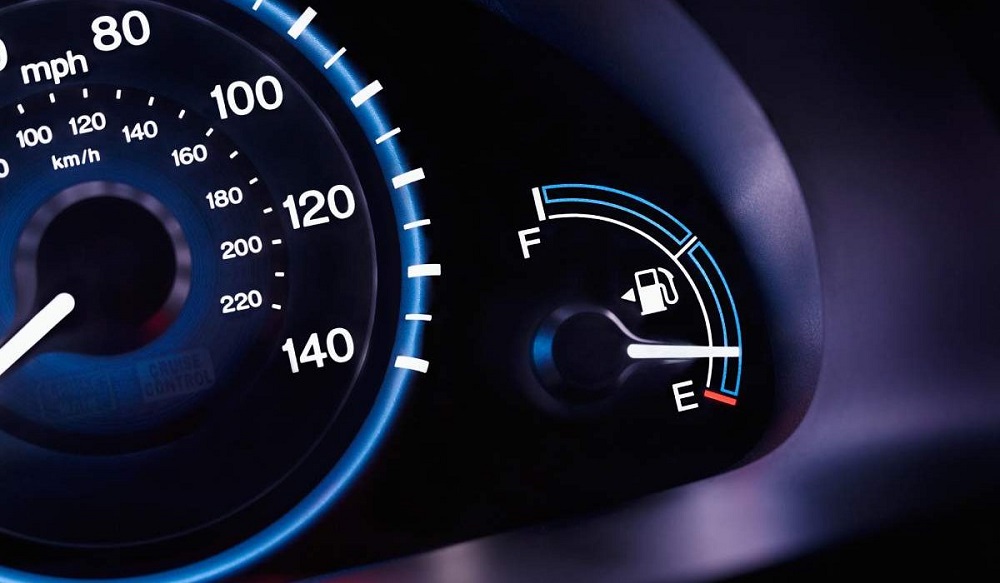
When shopping for a new or used vehicle, consumers are confronted with a mountain of specifications, ranging from horsepower and torque to towing capacity and cargo volume. While performance metrics are exciting, the statistic that will have the most significant, long-term impact on your daily bank account is fuel efficiency.
Understanding fuel efficiency ratings is no longer as simple as looking at a single number. With the introduction of advanced hybrid powertrains, plug-in electric vehicles, and traditional internal combustion engines, the metrics used to measure energy consumption have evolved. Decoding these ratings allows you to make an informed financial investment, minimize your environmental footprint, and accurately calculate the true cost of vehicle ownership.
Deconstructing the Monroney Sticker and EPA Testing
In the United States, every brand-new vehicle sold must display a window sticker known formally as a Monroney sticker. This document provides standardized, government-regulated information regarding the vehicle’s fuel economy, estimated annual fuel costs, and environmental impact.
The agency responsible for generating these numbers is the Environmental Protection Agency (EPA). It is important to realize that the EPA rarely drives these vehicles on actual public roads to determine their ratings. Instead, testing is conducted within a controlled laboratory environment utilizing a machine called a dynamometer, which functions as a treadmill for cars.
The vehicle is subjected to standardized driving cycles that simulate specific real-world conditions. These laboratory tests simulate various driving environments:
-
The City Test Cycle: This simulation represents typical urban driving conditions, featuring frequent stops, prolonged idling at traffic lights, and rapid speed variations over a short distance. Because stopping and starting a vehicle requires a significant amount of energy to overcome inertia, city ratings are almost always lower than highway numbers for traditional gas cars.
-
The Highway Test Cycle: This cycle simulates free-flowing traffic conditions on rural and interstate highways with a warm engine. It features minimal stopping, higher sustained speeds, and smooth accelerations, which optimize mechanical efficiency.
-
Supplemental Cycles: The EPA also utilizes extra tests to account for the energy drain of running air conditioning systems, driving in freezing cold temperatures, and executing high-speed, aggressive highway accelerations.
The Core Metric: Miles Per Gallon (MPG)
For conventional vehicles powered exclusively by gasoline or diesel fuel, the gold standard metric is Miles Per Gallon (MPG). This number indicates exactly how many miles the vehicle can travel using a single gallon of fuel. On the window sticker, you will see three distinct MPG figures: City, Highway, and Combined.
While city and highway ratings are useful for specific commuting profiles, the Combined MPG rating is the most reliable metric for general comparison. The EPA does not simply calculate a basic mathematical average of the city and highway numbers. Instead, it uses a weighted formula based on the assumption that the average American performs fifty-five percent of their driving in urban environments and forty-five percent on highways.
A higher MPG number indicates a more efficient vehicle. For example, a compact sedan rated at 35 Combined MPG will require significantly less fuel to operate over a year than a large sports utility vehicle rated at 18 Combined MPG.
Understanding Electric Vehicle Metrics: MPGe and kWh
The rise of plug-in hybrid electric vehicles (PHEVs) and battery electric vehicles (BEVs) required the creation of a new metric, as electric vehicles do not consume liquid gasoline. To help consumers compare conventional vehicles with electric models, the EPA developed Miles Per Gallon Equivalent (MPGe).
The concept of MPGe is built entirely on the thermal energy content of electricity versus gasoline. One standard gallon of regular unleaded gasoline contains approximately 115,000 British Thermal Units (BTUs) of energy. In electrical terms, this converts directly to 33.7 kilowatt-hours (kWh) of electricity.
Therefore, if an electric vehicle can travel 100 miles using exactly 33.7 kWh of electricity drawn from its battery pack, it is officially awarded a fuel efficiency rating of 100 MPGe. This rating allows you to see how efficiently an electric motor converts energy into forward motion compared to an internal combustion engine.
While MPGe is great for direct comparisons, a more practical metric for daily electric car tracking is kilowatt-hours per 100 miles (kWh/100 mi). This statistic measures electricity consumption rather than efficiency. In this specific metric, a lower number is superior, as it means the vehicle requires less raw electrical energy to cover the same distance.
Real-World Variables and the Efficiency Gap
A common point of frustration for car buyers is failing to achieve the exact MPG numbers printed on the window sticker during their daily commutes. The EPA explicitly states that these ratings are designed as a standardized baseline for comparing different vehicles, not an absolute guarantee of real-world performance.
Several external factors can create an efficiency gap between laboratory ratings and your actual fuel economy:
-
Driving Habits: Aggressive acceleration, tailgating, and hard braking waste immense energy. Smooth, progressive throttle inputs and maintaining a constant speed can improve fuel economy by up to thirty percent.
-
Vehicle Payload and Aerodynamics: Carrying unnecessary cargo in the trunk or installing roof racks, cargo boxes, and bicycle carriers increases aerodynamic drag and vehicle weight, forcing the engine to burn more fuel to maintain speed.
-
Environmental Conditions: Driving in extreme winter cold reduces engine efficiency and forces the battery or engine to work harder to heat the cabin. Similarly, driving into a strong headwind dramatically increases aerodynamic resistance.
The Financial Impact: Annual Fuel Costs and Savings
The fuel efficiency section of a window sticker also features a highly useful financial breakdown: the Estimated Annual Fuel Cost. This number is calculated using a standardized formula that assumes the vehicle will be driven 15,000 miles per year, utilizing a national average fuel or electricity price determined before the model year begins.
When comparing two potential vehicles, looking past the initial purchase price and comparing their annual fuel costs over a five-year ownership cycle is vital. A vehicle that is two thousand dollars cheaper to buy upfront but features poor fuel economy can easily end up costing you double that initial saving in gas station fill-ups over several years of commuting. Fuel economy is a recurring operational cost that directly dictates your monthly transportation overhead.
Frequently Asked Questions
Why do conventional gas vehicles get better mileage on the highway while hybrids get better mileage in the city?
Conventional gasoline engines operate most efficiently at a steady, low-load RPM, which occurs when a car is cruising smoothly on a highway in high gear. In contrast, standard hybrid vehicles utilize regenerative braking systems that capture kinetic energy during stopping sequences and store it in a battery. Because city driving involves constant stopping, hybrids can repeatedly capture this energy and use their electric motors to drive at low speeds without starting the gas engine, making them exceptionally efficient in urban gridlock.
What is the difference between a plug-in hybrid and a traditional hybrid regarding efficiency ratings?
A traditional hybrid cannot be plugged into an electrical outlet; its small battery is charged entirely by the gasoline engine and braking friction, and it only assists the engine. A plug-in hybrid features a much larger battery pack that can be charged using grid electricity. As a result, a plug-in hybrid features a dual rating system: a high MPGe rating for when it is running purely on grid electricity, and a standard, lower MPG rating for when the battery depletes and the vehicle defaults to operating like a traditional hybrid.
How does the size and type of a vehicle’s tires impact its fuel efficiency?
Tires directly impact fuel economy through rolling resistance, which is the energy loss caused by the tire deforming as it rolls over asphalt. Wider tires, heavy off-road tread patterns, and softer rubber compounds create higher rolling resistance and weight, reducing fuel economy significantly. Conversely, low-rolling-resistance tires, which are engineered with specific tread designs and harder rubber compounds, optimize fuel efficiency and are standard on most hybrid and electric vehicles.
Does using premium gasoline instead of regular unleaded improve a vehicle’s MPG rating?
Using premium fuel will not improve efficiency if your vehicle’s engine was engineered and rated to run on regular unleaded gasoline. Premium gasoline features a higher octane rating, which prevents premature fuel ignition in high-compression, turbocharged, or high-performance engines. You should only use premium fuel if your owner’s manual explicitly requires or recommends it to maintain peak mechanical performance and engine longevity.
How much does operating the air conditioning system drop a vehicle’s fuel economy?
Running the air conditioning system on maximum settings can reduce a conventional vehicle’s fuel economy by roughly five to twenty percent, depending on the outside temperature and cabin size. The air conditioning compressor draws mechanical power directly from the engine via a serpentine belt, increasing the engine’s workload. At highway speeds, however, running the air conditioning is often more efficient than driving with the windows fully rolled down, which creates massive aerodynamic drag.
What does the greenhouse gas rating on the window sticker indicate?
The greenhouse gas rating is a score from one to ten, with ten being the cleanest, that rates the vehicle’s tailpipe carbon dioxide emissions per mile compared to all other current vehicles. Carbon dioxide is the primary byproduct of burning fossil fuels, meaning this environmental score is directly tied to the vehicle’s fuel efficiency rating; vehicles with the highest MPG ratings will automatically achieve the highest greenhouse gas scores.