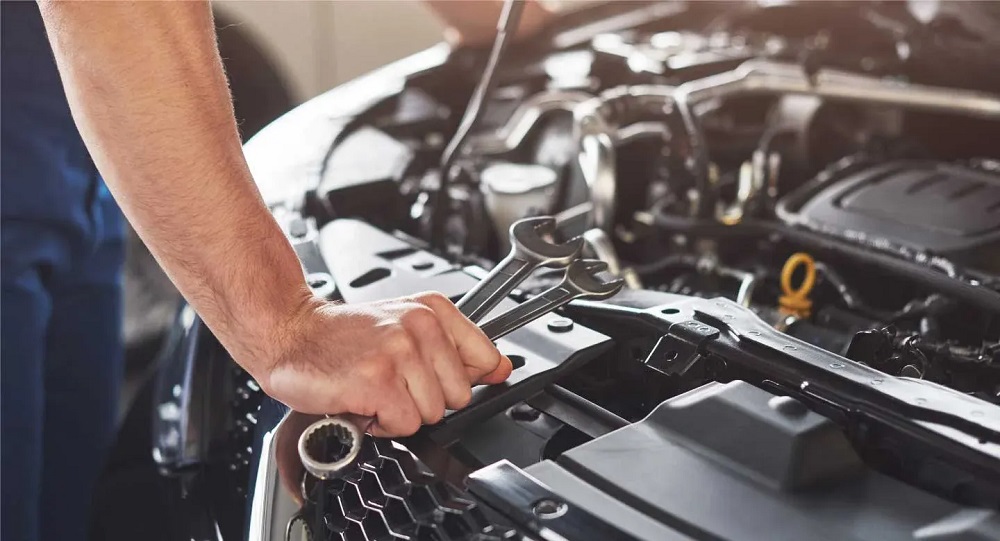

For the vast majority of households, a vehicle represents one of the largest capital investments outside of real estate. Yet, despite the substantial financial layout required to acquire an automobile, many owners treat preventative maintenance as an optional or deferrable expense. They wait until a critical mechanical component fails completely or a warning light illuminates on the dashboard before seeking professional automotive care.
This reactive approach to vehicle ownership is financially inefficient and mechanically destructive. An automobile is a complex assembly of thousands of rapidly moving parts, high-pressure hydraulic systems, and sophisticated electronics working continuously under extreme heat and structural stress. Regular maintenance and proactive repair act as a shield against the natural forces of friction, thermal breakdown, and chemical corrosion. Approaching vehicle longevity systematically reveals that structured, preventative care is the primary variable dictating whether a car succumbs to premature mechanical failure or successfully operates beyond two hundred thousand miles.
The Chemical Reality of Fluid Degradation
The foundational element of automotive longevity centers on the management of internal fluids. Fluids are the lifeblood of a vehicle, responsible for lubrication, thermal regulation, hydraulic pressure, and chemical cleaning within sealed mechanical ecosystems. Over time, these vital liquids degrade, lose their protective properties, and mutate into destructive agents.
Engine Oil and the Friction Frontier
Engine oil undergoes immense thermal stress. Its primary function is to create a microscopic hydraulic film between rapidly moving metal surfaces—such as pistons, crankshafts, and camshafts—preventing destructive metal-on-metal contact. As oil ages, its chemical additive packages break down, its viscosity changes, and it becomes contaminated with microscopic carbon particulates, fuel blow-by, and moisture.
If engine oil is not replaced at scheduled intervals, it transforms into a thick, sticky sludge. This sludge restricts oil passage flow, starves critical components of lubrication, and accelerates mechanical wear exponentially. Regular oil changes remove these suspended abrasive contaminants and replenish the anti-friction additives necessary to preserve engine tolerances over decades of operation.
The Protective Role of Coolant and Transmission Fluids
Similarly, engine coolant and transmission fluid require periodic replacement to maintain internal chemistry:
-
Coolant System Protection: Engine coolant is a mixture of water and glycol formulated with robust corrosion inhibitors. As it cycles continuously through the aluminum and iron elements of the engine block and radiator, its anti-corrosive properties deplete. Old coolant allows scale formation, internal rust, and electrolysis to occur, eating away at water pumps, head gaskets, and heating cores.
-
Transmission Fluid Integrity: Automatic and manual transmission fluids manage extreme torsional heat while facilitating smooth gear changes. When transmission fluid breaks down due to age and thermal stress, its friction coefficients alter, leading to clutch slippage, internal varnish buildup, and eventual gear synchronization failure.
Mitigating the Domino Effect of Mechanical Failures
In automotive engineering, mechanical systems are deeply interdependent. A minor, inexpensive component that is beginning to wear out rarely limits its negative impact to itself; instead, it initiates a cascading domino effect that stresses and destroys adjacent, high-value assemblies.
Consider the vehicle’s suspension and steering systems. A worn-out rubber suspension bushing or a slightly loose tie-rod end might initially manifest as nothing more than a minor steering vibration or a faint clunking noise over road bumps. If ignored, this minor play allows the wheel assembly to move outside its engineered alignment parameters. This misalignment causes rapid, uneven tire tread wear, forcing the owner to replace expensive tires prematurely.
Furthermore, the continuous vibration and un-dampened impact forces travel directly up the steering column and into the steering rack, wheel bearings, and shock absorbers, mutating a simple fifty-dollar bushing replacement into a multi-thousand-dollar total suspension overhaul.
The braking system provides another stark example of the domino effect. Brake pads utilize a sacrificial friction material designed to wear away progressively to protect the hard steel brake rotors. When an owner ignores the warning squeal of worn-out brake pads and allows the friction material to deplete completely, the bare metal backing plate clamps directly onto the polished rotor face. This metal-on-metal contact scores, warps, and destroys the brake rotors instantly, while generating intense thermal energy that can boil the surrounding brake fluid and cause complete hydraulic brake failure.
Preserving Fuel Efficiency and Reducing Engine Strain
Regular maintenance directly impacts how efficiently an engine processes fuel and converts it into forward motion. An efficiently running powertrain operates under significantly lower physical stress, which directly translates into a prolonged operational lifespan.
The combustion process relies on a precise ratio of clean air and atomized fuel entering the cylinders. Over time, spark plugs degrade as their electrical gaps widen due to spark erosion, leading to weak or inconsistent ignition cycles. Simultaneously, the engine air filter accumulates road dust, pollen, and debris, choking the intake system and forcing the engine to work harder to pull in oxygen.
Operating an engine with fouled spark plugs and a clogged air filter results in incomplete fuel combustion, commonly known as engine misfires. These misfires allow raw, unburned fuel to exit the combustion chamber and enter the exhaust tract. This unburned fuel travels directly into the catalytic converter—an expensive emissions control device—where it burns at extremely high temperatures, melting the internal precious-metal honeycomb structure and causing catastrophic exhaust restrictions. Regular replacement of basic tune-up items like air filters, fuel filters, and spark plugs protects high-value exhaust components while ensuring the engine maintains peak compression and efficiency.
Proactive Diagnostic Code Management
Modern automobiles are essentially rolling computer networks governed by an Engine Control Unit and dozens of sub-modules. These systems utilize an array of sensors to monitor everything from exhaust oxygen content and crankshaft positioning to transmission line pressure and individual wheel speeds.
When an internal parameter drifts outside its optimal engineering window, the computer logs a Diagnostic Trouble Code and illuminates the Check Engine light. Ignoring a dashboard warning light because the vehicle still feels like it is driving normally is a dangerous gamble. The computer may have entered a default operating state known as limp mode or safe mode.
In this state, the computer alters ignition timing and enriches the fuel mixture to protect the engine from immediate destruction, sacrificing fuel efficiency and increasing long-term carbon buildup on internal valves and pistons. Proactive scanning and resolution of diagnostic trouble codes allow technicians to pinpoint shifting operational parameters and execute minor sensor or wiring corrections before they manifest as absolute mechanical breakdowns on the highway.
Frequently Asked Questions
What is the mechanical difference between a severe and a normal maintenance schedule?
Most owners mistakenly follow the normal maintenance schedule outlined in their user manuals, which is engineered for hypothetical, ideal driving conditions. Automotive manufacturers define a severe maintenance schedule as one involving short trips under five miles, prolonged idling in stop-and-go traffic, driving in extreme heat or freezing cold, or operating in dusty, mountainous conditions. For the vast majority of commuter vehicles, daily driving habits actually fall under the severe category, requiring more frequent fluid and filter changes to maximize vehicle longevity.
How does skipping regular wheel alignments reduce the lifespan of the vehicle?
When wheels are out of alignment, they do not point in the exact same direction, causing the tires to drag sideways against the asphalt rather than rolling smoothly. This creates continuous lateral resistance that forces the engine to burn more fuel to maintain speed. Additionally, the constant fighting between the misaligned wheels puts immense, un-engineered torsional stress on wheel bearings, steering linkages, and CV joints, accelerating mechanical fatigue across the entire front-end assembly.
Why is the timing belt considered one of the most critical maintenance items?
The timing belt synchronizes the rotation of the crankshaft and the camshaft, ensuring the engine’s valves open and close at precise intervals relative to the position of the pistons. In interference engine designs, the clearance between open valves and rising pistons is incredibly tight. If a timing belt snaps due to old age or dry rot, the synchronization instantly vanishes, causing the heavy steel pistons to smash into the fragile open valves at thousands of revolutions per minute, destroying the cylinder head and engine block completely.
How does regular brake fluid flushing protect the internal hydraulic system?
Brake fluid is hygroscopic, meaning it actively absorbs moisture from the surrounding atmosphere through microscopic pores in the rubber brake hoses and seals. Over a period of two to three years, the water content within the brake fluid rises. This moisture lowers the boiling point of the fluid, which can cause soft brake pedals during heavy braking. More critically, the trapped water causes internal rust and pitting inside expensive anti-lock braking system pumps and hydraulic calipers, leading to system failure.
What is the operational lifespan benefit of regular chassis lubrication?
Many modern light trucks, sports utility vehicles, and older sedans feature grease fittings on their steering linkages, ball joints, and driveshaft U-joints. Regular application of high-pressure chassis grease displaces road water, salt, and abrasive grit that enters the joint seals during daily operation. This protective grease barrier minimizes internal friction, cushions metal-on-metal impacts from potholes, and prevents the structural joints from snapping or locking up due to dry friction wear.
Does regular tire rotation protect components other than the tires themselves?
Yes, while tire rotation primarily ensures uniform tread wear across all four positions, it also directly protects the vehicle’s drivetrain components, particularly in all-wheel-drive and four-wheel-drive systems. If tires wear unevenly, the resulting difference in overall tire diameter forces the front and rear axles to rotate at slightly different speeds, even when driving in a straight line. This continuous speed differential puts severe heat and mechanical strain on the transfer case and differentials, leading to premature gear failure.